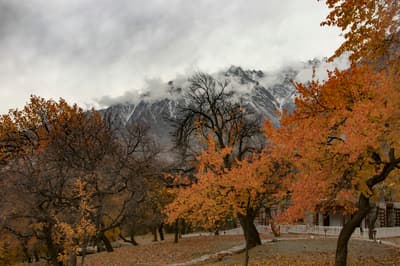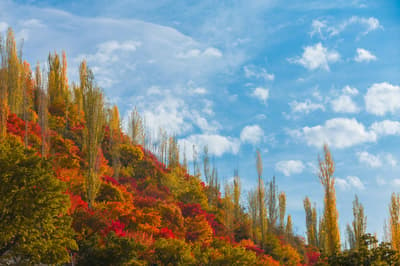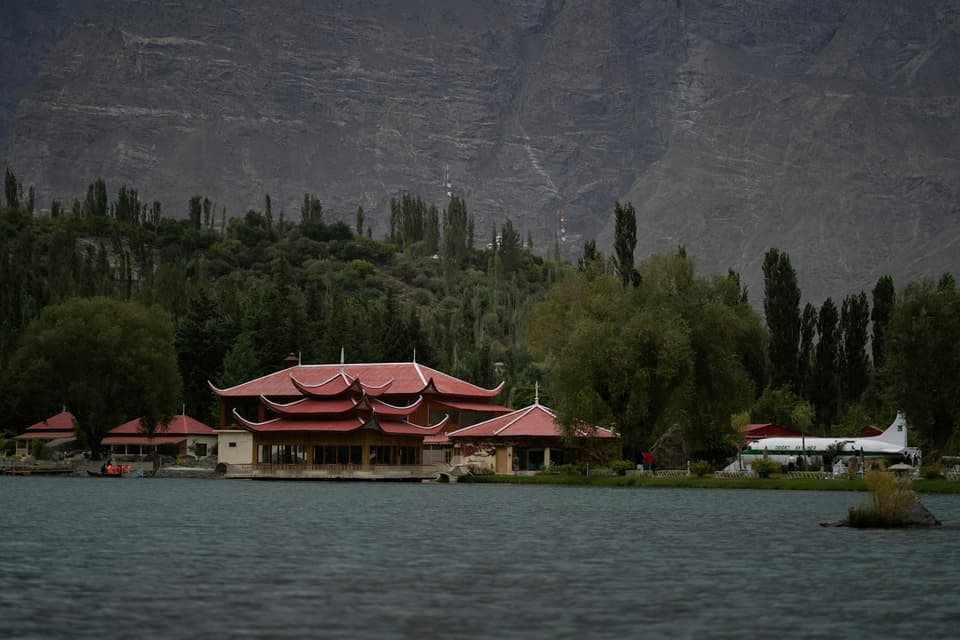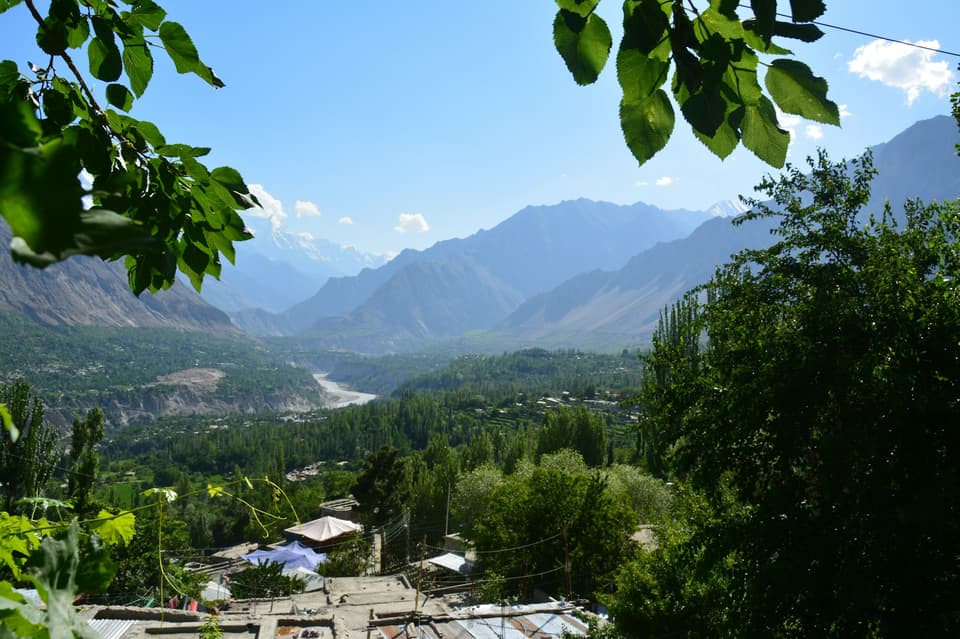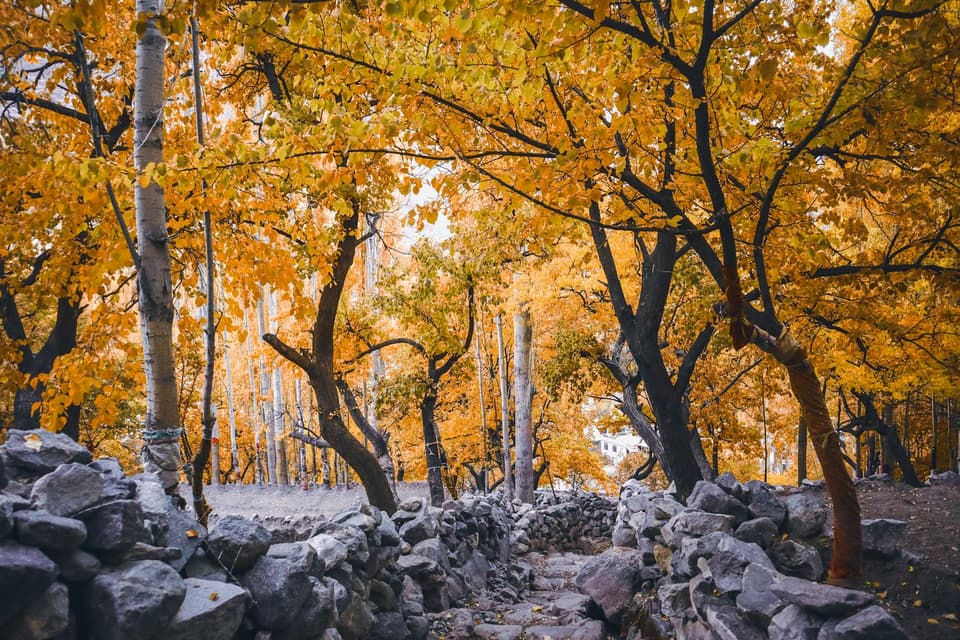

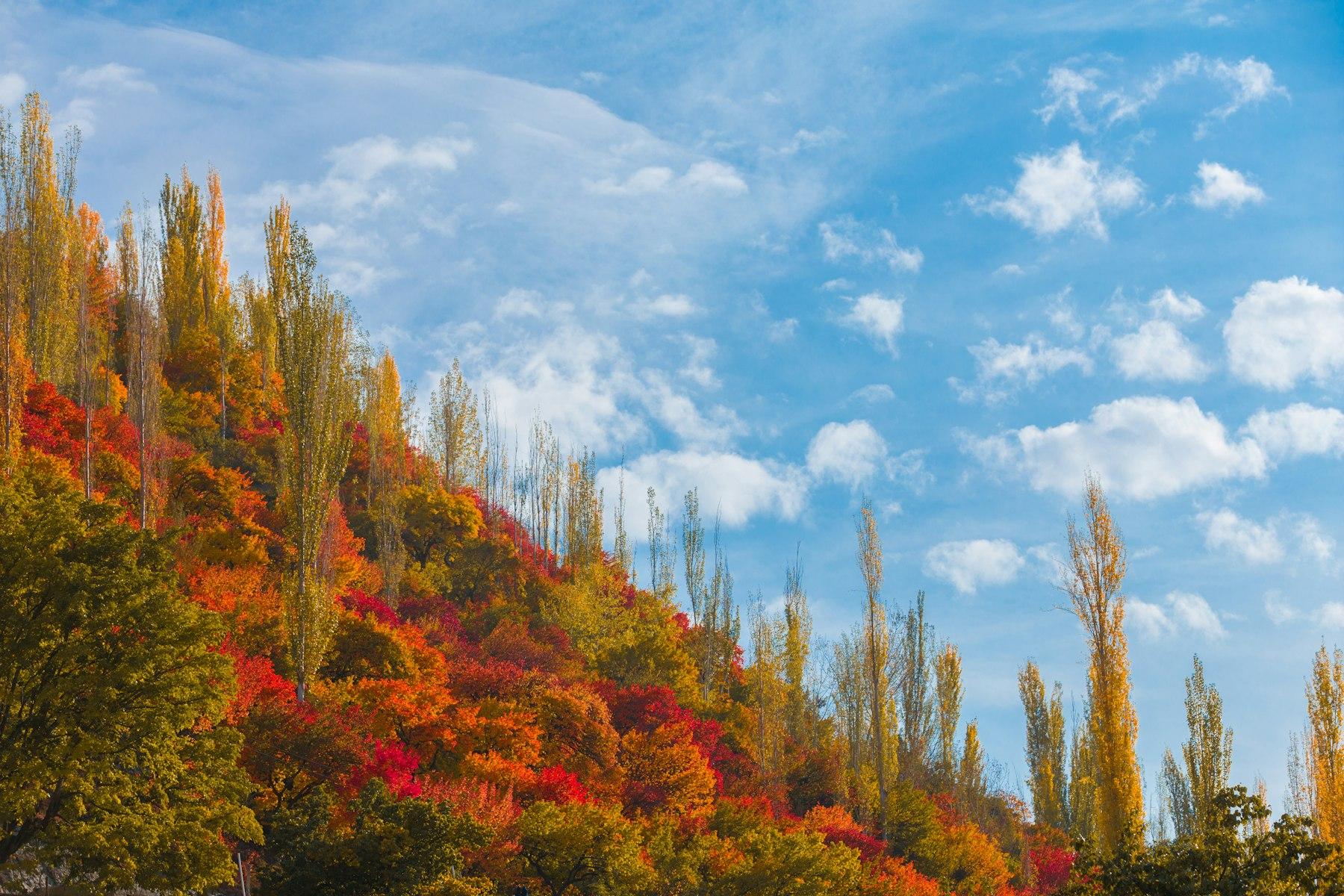
Autumn 2026 is under way in the north of Pakistan. From the start of October the poplars, apricot trees and willows of Gilgit-Baltistan begin to turn, first in the high villages and then down the valleys, until whole hillsides are gold, orange and red under clear blue skies. Here are the ten best places to see autumn in Pakistan, when each one usually peaks, what the weather and roads are like, and how to plan a trip while the colour lasts.
Prices at a Glance
| Tour | Length | Essential | Signature | Elite |
|---|---|---|---|---|
| Autumn Skardu Tour | 5 Days / 4 Nights | 90,000 | 140,000 | 250,000 |
| Autumn Hunza Tour | 5 Days / 4 Nights | 90,000 | 140,000 | 250,000 |
| Autumn Hunza & Skardu | 8 Days / 7 Nights | 144,000 | 224,000 | 400,000 |
| Autumn Skardu Tour | 6 Days / 5 Nights | 108,000 | 168,000 | 300,000 |
| Autumn Skardu Premium | 7 Days / 6 Nights | 126,000 | 196,000 | 350,000 |
- Autumn Skardu & Khaplu Tour: Price on request
- Autumn Skardu & Tormik Dunsa Valley: Price on request
Autumn 2026: where the season is now
In early October the colour starts in the higher and colder valleys: Upper Hunza around Gulmit and Passu, Naltar, Astore and Phander. The lower valleys follow, and central Hunza, Nagar, Skardu, Shigar and Khaplu are usually at their best in the second half of October and into the first days of November.
If you are planning a trip right now, the next four weeks are the season. Our team lives in Skardu and travels these roads every week, so message us on WhatsApp and we will tell you how the colour looks this week and which valley to head for.
When autumn peaks in each valley
Upper Hunza (Gojal: Gulmit, Passu, Hussaini): usually from the second week of October, a little ahead of the rest of Hunza.
Naltar, Astore and Phander: through October, with the higher villages turning first.
Central Hunza and Nagar (Karimabad, Altit, Minapin): the second half of October, often lasting into early November.
Skardu, Shigar and Khaplu: the second half of October into early November.
These are the usual weeks, not fixed dates. A cold spell brings the colour forward and a warm autumn holds it back, so a window of four or five days gives you the best chance of catching each valley at its peak.
The 10 best places to see autumn in Pakistan
1. Karimabad, Baltit Fort and Altit Fort, Hunza. Terraced apricot orchards turn orange and red below the old forts, with Rakaposhi and Ultar Sar above them. Eagle's Nest at Duikar is the place for sunrise over the whole valley.
2. Gulmit, Passu and Hussaini Bridge, Upper Hunza. Rows of golden poplars stand against the jagged Passu Cones, and the shores of turquoise Attabad Lake turn yellow on the way up.
3. Nagar and the Rakaposhi view. The Karakoram Highway between Ghulmet and Minapin runs through orchards and poplar lines with Rakaposhi straight ahead: the classic Pakistani autumn road photograph.
4. Shigar Valley. Long poplar avenues, the 17th-century Shigar Fort, and the white sand dunes of the Sarfaranga Cold Desert framed by gold trees.
5. Upper Kachura Lake and Shangrila, Skardu. Clear blue water and golden willows, with the quietest mornings of the year once the summer crowds have gone.
6. Khaplu, Ghanche. Khaplu Palace, the old lanes of the town and the wide Shyok river valley, lined with poplars that stay gold late into the season.
7. Basho Valley, Skardu. A forested side valley that glows yellow and copper in October, reached by jeep from the Skardu road.
8. Manthoka Waterfall, Kharmang. A tall waterfall in a green-and-gold orchard village, a good day out from Skardu when Deosai is closed.
9. Phander Valley, Ghizer. A blue lake, a winding river and golden trees along the valley floor, a long and beautiful drive west of Gilgit.
10. Naltar Valley, Gilgit. Pine forest above, gold and orange trees along the valley floor, a jeep ride up from the Gilgit road.
Autumn weather in Gilgit-Baltistan
October is one of the driest and clearest months of the year in the north. Days are mostly sunny and mild, roughly 15 to 20°C at midday in Hunza and Skardu, and the air is sharp enough to see the 7,000-metre peaks in detail.
Nights are cold: a few degrees above freezing in early October, and around or below freezing by the end of the month and in November. Bring a warm jacket and layers, a hat and gloves for early starts, sunglasses, sunscreen and comfortable walking shoes.
Roads, passes and flights in autumn
The Karakoram Highway to Gilgit and Hunza stays open all year, and the road from Gilgit to Skardu is open through autumn. The Babusar Pass route through Naran is the quicker summer road from Islamabad and usually closes with the first heavy snow, often in November; after that the drive goes along the Karakoram Highway via Besham.
Khunjerab Pass, the border with China above Hunza, usually stays open until snow closes it in November. Deosai Plains, at about 4,114 metres, are normally closed by snow from October, so treat a Deosai day in autumn as a bonus, not a plan.
Flights from Islamabad to Skardu and Gilgit run in autumn but are often delayed or cancelled for weather. Keep a spare day at the end of your trip, and plan a road option if you fly in.
How many days you need
Five days is enough for one valley if you fly in: Skardu with Shigar and Kachura, or Hunza with Attabad Lake and the Passu Cones. Eight days covers both Hunza and Skardu, driving between them on the Gilgit road.
Coming by road from Islamabad adds about two days each way. From Lahore or Karachi, most of our guests fly to Islamabad first and start from there.
Tips for an autumn trip
Book early. The last two weeks of October are now the busiest of the autumn, and the best hotels in Karimabad and Skardu fill up first, especially at weekends.
Plan around the light. The colour looks best in the first and last two hours of the day, so start early and keep the long drives for the middle of the day.
Respect the orchards and villages. The trees and fruit belong to local families, so ask before walking into an orchard or picking anything, and dress modestly in the villages.
Our private autumn tours
This season we run seven private autumn tours: the Autumn Skardu Tour of 5 or 6 days, the 7-day Autumn Skardu Premium with Basho Valley, Autumn Skardu & Khaplu over 6 days, Autumn Skardu & Tormik Dunsa Valley over 5 days, the 5-day Autumn Hunza Tour, and Autumn Hunza & Skardu, 8 days across both valleys.
Every tour is private, on your own dates, with your own vehicle and driver, in Essential, Signature or Elite. The prices for 2 persons are in the table above, and for a family or group we send a quotation the same day.
Frequently asked
In the north of Pakistan, autumn colour runs from early October to early November. It starts in the higher valleys such as Upper Hunza and Naltar, and peaks in Hunza, Skardu, Shigar and Khaplu in the second half of October.
Hunza Valley (Karimabad, Gulmit and Passu), Skardu with Shigar Valley, Khaplu, Phander Valley and Naltar. Hunza and Skardu are the easiest to reach and can be combined in one 8-day trip.
The first week of November usually still has colour in Skardu, Shigar, Khaplu and central Hunza. From the middle of November most trees are bare and nights are well below freezing.
Days are usually sunny and around 15 to 20°C at midday. Nights fall to a few degrees above freezing in early October, and to around or below freezing by the end of the month.
In our October 2026 price list, the 5-day Autumn Skardu Tour or Autumn Hunza Tour for 2 persons is PKR 90,000 in Essential, PKR 140,000 in Signature and PKR 250,000 in Elite. Autumn Hunza & Skardu, 8 days, is PKR 144,000, PKR 224,000 and PKR 400,000.
Yes. The Karakoram Highway is open all year and the Gilgit to Skardu road is open through autumn. The Babusar Pass route usually closes with the first heavy snow, often in November, after which the drive goes via Besham.